
A tractor can look like the answer to a long list of jobs around a rural property. Slashing, moving mulch, maintaining tracks and handling materials all become part of the buying conversation.
The difficulty is choosing one that suits the work you will actually do. A larger horsepower figure can be reassuring, and a package with several implements can appear good value. Neither tells you whether the tractor will be convenient to use around your sheds, work with the equipment you need or come with support you can access.
Before comparing models, spend some time on the less glamorous details. They are often what separates a useful purchase from an expensive machine that never quite suits the property.
Begin with a normal month on the property
Property size is a starting point, but it is not a complete buying brief.
Two properties of similar acreage can have very different requirements. One might have open paddocks and straightforward mowing work. Another might include trees, narrow gateways, tight yards and several small areas that need regular attention.
Write down the work you expect to do in a normal month. Be specific about the implements involved and how often you would use them.
For example, “maintain the paddocks” leaves plenty unanswered. Regular slashing with an identified implement gives a dealer something more useful to assess.
Also separate recurring tasks from occasional work. A job that happens once a year may be worth discussing with a contractor rather than allowing it to determine the entire tractor purchase.
The goal is not the smallest or largest tractor you can afford. It is a sensible match for the jobs that will occupy most of its time.
Use horsepower to shortlist, not to decide
Horsepower is easy to compare, which is why it attracts so much attention. But it does not establish implement compatibility, loader capability or how well a tractor suits a particular property.
When an implement specifies power requirements, check what those figures refer to. Do not assume an engine power figure is interchangeable with a PTO power requirement.
Transmission, physical dimensions, linkage and hydraulic specifications may also matter to the proposed work.
Once you have a task list, Achilles Machinery’s tractor range provides a starting point for comparing models and configurations. Ask the supplier to explain the recommendation in terms of your work, rather than simply moving you towards the next horsepower bracket.
A useful answer should make the trade-offs clear. What does the larger model offer for your regular tasks? What extra space, cost or equipment might it require? What would you give up by choosing the smaller option?
Walk the routes the tractor will use
Before a showroom visit, check the places the tractor needs to go.
Measure shed entrances, gateways and other restricted points. Look at turning areas and where implements will be stored or connected. Consider the tractor with its proposed equipment, not just the bare machine.
A loader, bucket or rear implement changes the space needed around buildings and yards. A tractor that fits inside the shed may still be inconvenient to manoeuvre through the approach.
Photographs can help a supplier understand the layout, although they do not replace an appropriate site assessment where one is needed.
Describe uneven areas and other difficult conditions accurately. Do not expect a horsepower figure, four-wheel drive or a tyre choice alone to establish suitability for every part of the property.
Choose the implements as carefully as the tractor
The tractor and its implements need to be considered together.
If you already own a slasher, mower or other equipment, gather the make, model and manufacturer’s information before asking whether it will fit. Relevant checks can include the linkage category, PTO requirements, hydraulic connections and the implement’s weight and lifting arrangement.
A similar horsepower rating or a connection that appears to fit is not enough to settle the question.
For new implements, ask the supplier to identify the exact models in the quote. A description such as “slasher included” leaves room for misunderstanding about specification and suitability.
It is tempting to buy every available implement at once. A more measured approach is to start with equipment for the regular work and add to it when a genuine need becomes clear.
That also leaves room in the budget for maintenance, delivery and other ownership costs.
Give the loader its own buying conversation
If a front-end loader is important to the purchase, explain what you intend to handle.
“General property work” could mean shifting loose mulch, moving soil or handling an identified load with a particular attachment. Those are not identical requirements.
Ask for the relevant information for the complete tractor, loader and attachment combination. A single advertised lifting figure should not be treated as confirmation for every attachment, height or load position.
The supplier should identify the applicable manufacturer’s instructions and any configuration requirements, including ballast where specified. Avoid treating an unfamiliar load as acceptable simply because the tractor can raise it during a demonstration.
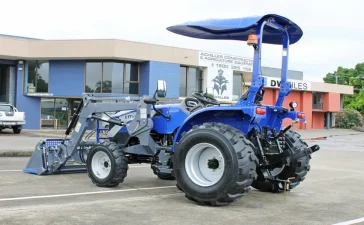
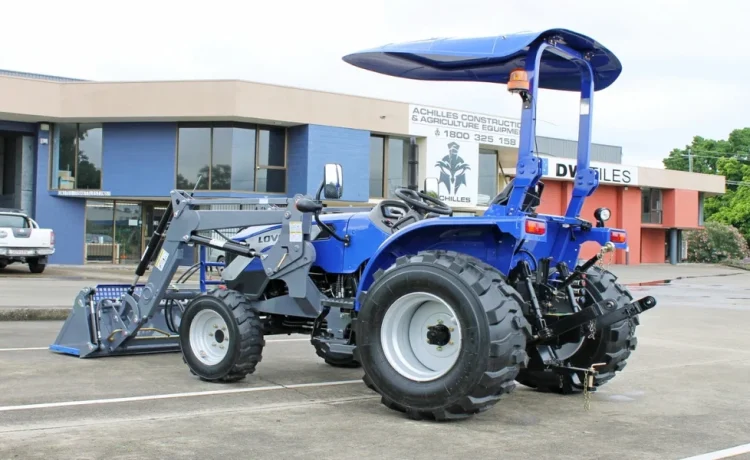
Also check whether the loader and bucket are included in the advertised price. Photographs often show a complete-looking machine, but the written inclusion list is what makes the offer clear.
Spend time in the operator’s seat
A tractor that suits the job on paper still needs to work for the person using it.
During an inspection, take time to understand the controls, access and visibility. Ask the dealer to explain the transmission and demonstrate its operation appropriately.
Think about the work ahead: frequent changes of direction, regular stopping and starting, or longer periods using an implement. Discuss how the proposed transmission and controls relate to those tasks.
If comparing an open tractor with a cab model, inspect the actual equipment supplied. Confirm the features, dimensions and visibility rather than making assumptions from the model name.
A comfortable seat and convenient controls do not replace correct selection or training, but they are worth considering before buying.
Budget for ownership, not just delivery day
Request an itemised quote covering the tractor configuration, loader if supplied, bucket, implements, optional equipment, GST and freight.
Then ask about servicing. Where will it be carried out? What information is supplied for routine maintenance? How are parts ordered, and what happens if the machine needs workshop attention?
Distance matters on a rural property. Understand who arranges transport and how related charges are handled rather than assuming a local sales presence includes every type of on-site service.
For a used tractor, maintenance records and an independent condition assessment can help inform the decision. Hours alone do not reveal how a machine has been used or maintained.
For a new tractor, read the written warranty and service conditions. Ask about anything unclear before payment, while there is still time to compare alternatives.
Finish with a clear purchase brief
By the time you request a final quote, you should have a short, useful description of the purchase: the regular jobs, intended implements, access restrictions, preferred configuration and delivery postcode.
You can contact Achilles Machinery to discuss a tractor package with those details and ask for the remaining questions to be addressed in writing.
The best choice may not be the model with the biggest engine or the longest list of extras. It is the tractor that suits the property’s routine work, comes with compatible equipment and has ownership arrangements you understand.
That is a more reliable basis for a purchase than buying extra capacity simply because it is available.